"Pay monthly" sounds like the affordable option. It is not the same question as "what does this actually cost me." Before you sign anything, it is worth knowing what you will have paid, and what you will actually own, after one year, three years, and five.
This is not an attack on any provider. Several of the named pay-monthly services below are perfectly legitimate businesses doing exactly what they say on the tin. This is just the maths, laid out plainly, so you can do your own sums before you commit to anything.
Key Takeaways
- "Pay monthly website design" covers two different models, and most providers never tell you which one you are buying.
- The real crossover point is further out than most comparisons admit. Against a typical rent-forever plan, buying outright usually only pays for itself after roughly six to seven years, not one or two.
- Ownership is not primarily about saving money sooner. It is about who controls the site if a provider changes its pricing, gets bought out, or simply stops trading.
- What happens when you stop paying depends entirely on which model you signed up to, and the honest answer is rarely in the first paragraph of a sales page.
What "Pay Monthly Website Design" Actually Means
Pay monthly website design is a service where you pay an ongoing monthly fee instead of a single upfront cost, in exchange for a website being designed, hosted, and kept running on your behalf. That much is consistent across almost every provider. What is not consistent, and rarely explained clearly, is what you are actually buying with that monthly fee.
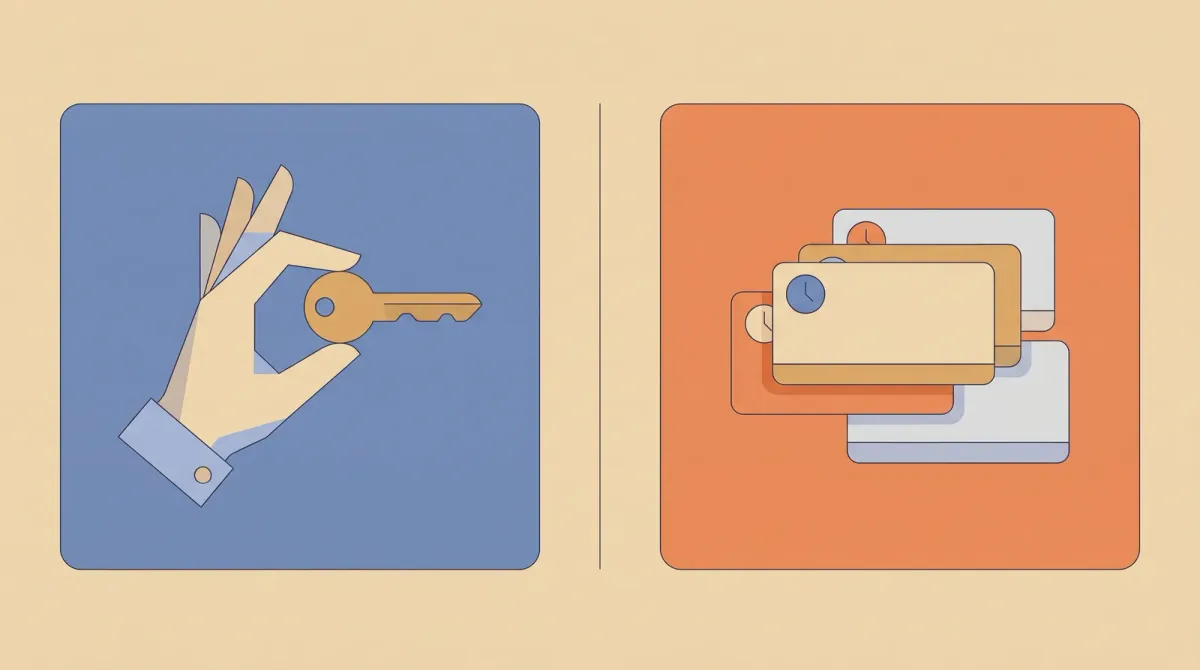
There are two different models hiding under the same name, and conflating them is where most comparisons go wrong.
- Rent forever. This is the classic version. The provider builds and keeps the design and the code. Your monthly fee is genuinely a subscription, not an instalment. Stop paying, and the site typically comes down. Most of the UK market runs on this model.
- Instalment to own. This is less common but real. Your monthly fee is a payment plan for a build you will own outright once it is paid off, usually over 12 to 36 months. The monthly cost is often higher, because there is no ongoing subscription subsidising it, but the destination is different: at the end, it is yours.
Neither model is dishonest. What is dishonest is a provider who never tells you which one you are on. If you take one thing from this article, take that question: are you renting this website forever, or paying off something you will eventually own?
The Real Numbers: What UK Providers Actually Charge
Pay monthly websites in the UK cluster more tightly on price than you might expect in 2026, mostly between £19 and £95 a month for the rent-forever model. The named examples below come from a published comparison by Build 76, a pay-monthly provider itself, checked against prices in August 2026.
- Mojo Websites: from around £19/month, no setup fee, no contract
- Inventis: from £29/month on a 12-month agreement
- Kitching Ltd: £39.99/month, no setup fee, includes copywriting
- Yopp Websites: from around £40/month, no minimum term
- Netmatters: from £44/month
- Lollipop Rocks: £25 to £95/month depending on page count, no minimum term
Pixelish is the clearest UK example of the instalment-to-own model: £274/month over 12 months, falling to £174/month over 24 months or £144/month over 36 months, with the site becoming the client's outright once the build is paid off. That is a genuinely different product from the rent-forever plans above, even though it also gets called "pay monthly."
For comparison, a small UK agency building a brochure site outright typically charges from around £2,500, rising depending on scope. Our own guide to what web design actually costs in the UK breaks this down by site type if you want the fuller range.
The Real Crossover: When Does Buying Actually Pay Off?
Here is a worked example using realistic numbers, not a comparison rigged to make either option look better. Take a typical rent-forever plan at £45/month, roughly the midpoint of the named providers above, against buying outright for £2,500 and paying only for domain and hosting afterwards, around £15/month, with no ongoing support plan layered on.
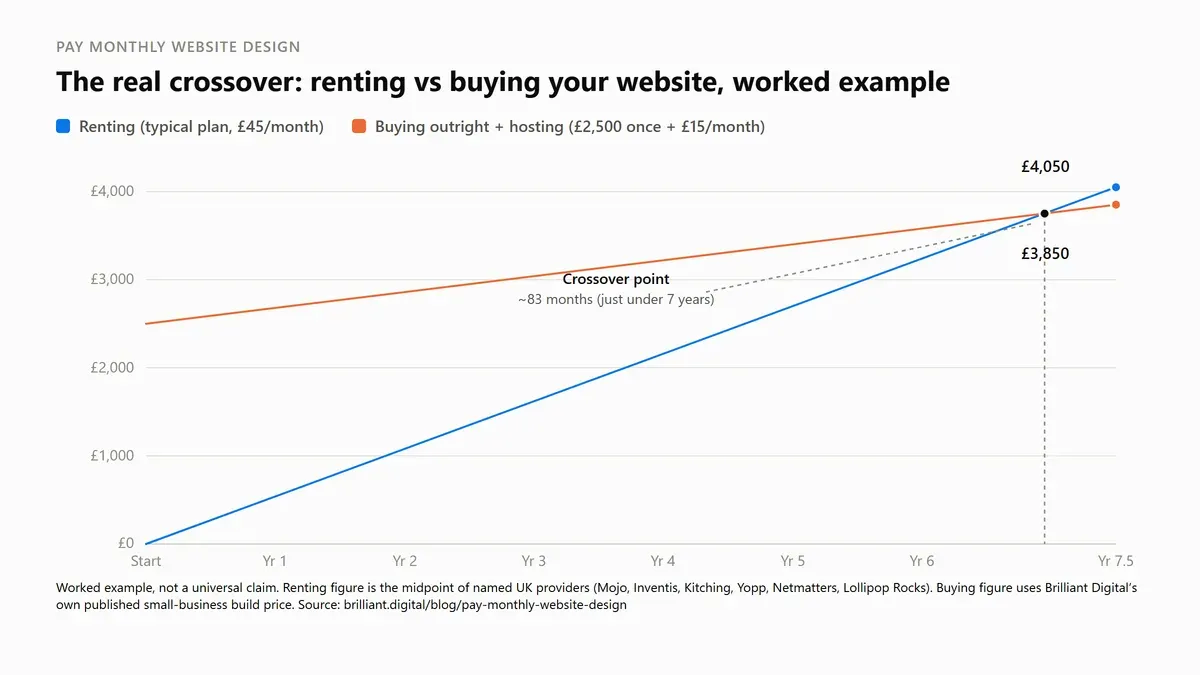
- Year 1: renting costs £540. Buying costs £2,680.
- Year 3: renting costs £1,620. Buying costs £3,040.
- Year 5: renting costs £2,700. Buying costs £3,400.
- Crossover point: around month 83, just under seven years, is when the cumulative cost of renting finally overtakes the cost of buying plus bare-minimum hosting.
That is the honest answer, and it is not the one most "pay monthly vs buying" comparisons lead with. Within five years, on pure monthly outlay with no support plan attached, a cheap rent-forever plan is genuinely hard to beat on cost alone.
The crossover point moves a lot depending on which tier you are actually comparing. At the cheap end (Mojo, around £19/month), the maths above gets even more lopsided towards renting. At the pricier end of the rent-forever market, a plan around £150/month, closer to what Liven Creative charges, crosses over against the same £2,500 build in well under two years. The lesson is not "renting is always cheaper" or "buying is always cheaper." It is that the number on the provider's homepage is the start of the sum, not the answer to it, and you should do this calculation with your own quoted price before you sign anything.
Which is exactly why cost alone is the wrong question. Six or seven years of rent is money spent on something you will never own. The same money spent on a build, however long that build actually takes, is money spent on an asset that is yours from the day it launches. If the provider raises prices, gets acquired, or closes down, a rented site has no residual value to you. A bought one does, regardless of who built it.
What Happens When You Stop Paying?
What happens depends entirely on which model you are on, and this is the question to ask before you sign, not after you want to leave. Under a rent-forever plan, the site and its hosting are usually not transferable, and stopping payment generally means the site comes down. Under an instalment-to-own plan, leaving before the term ends has different, provider-specific consequences, so check the contract. Under full ownership, nothing disappears, because there is no ongoing relationship for anyone to end.
Some rent-forever providers do offer a safety net: a buy-out option, or a promise that the domain transfers to you if they ever stop trading. That is worth asking about directly, because it is not the default across the market.
Instalment-to-own plans tend to be more generous here, because the whole point is that you are working towards ownership rather than renting access. Several let you settle the remaining balance early and take the site outright sooner than the original term, rather than treating early exit as a breach. If you are on this model, that settlement figure is worth asking for upfront, not after you have decided you want to leave.
It is also worth knowing your general rights here. Under the Consumer Rights Act 2015, a business cannot enforce contract terms on you that are unfair, and Citizens Advice's guidance on cancelling a contract explains cooling-off periods and what happens once a minimum term expires. It is written for phone and broadband contracts, but the same principles apply to any rolling monthly service.
Is a Monthly Plan Ever the Right Call?
Yes, genuinely, in specific situations rather than as a default choice. A rent-forever plan can be the right call when cash flow is tight at the very start of a business, when something needs to be live within days rather than weeks, or when the business itself might not survive long enough for a five-year ownership argument to matter.
- Tight starting cash flow. £0 upfront beats £2,500 upfront if that £2,500 is genuinely not there yet.
- Speed. Several rent-forever providers can launch a site within a week. A bespoke build usually takes longer.
- Genuine uncertainty about the business surviving. If you are not confident the business will still exist in 18 months, renting caps your downside.
- You genuinely do not want to think about it. Some business owners would rather pay a flat fee forever than ever deal with a renewal, a hosting bill, or a "the site's down" phone call themselves. That is a legitimate preference, not a mistake, provided you have done the sum above and decided the premium is worth it to you.
Where it tends to go wrong is when a business keeps paying a rent-forever fee for years past the point where it would have made more sense to own the site outright, simply because nobody ever ran the numbers. If you are weighing this up, our guide to what to look for before you hire a web designer covers the questions worth asking any provider, rent-forever or otherwise.
How We Price Ongoing Support
Brilliant Digital does not sell a rent-forever website. We have built 150+ websites since 2014, and every single one is the client's from day one: the domain, the code, the content, all of it. What we do offer, for clients who want it, is an ongoing support plan on top of a site they already own, and a typical UK maintenance retainer for a small business site runs £50 to £200 a month, depending on how much ongoing work is included.
The difference is what that monthly fee is actually paying for. It is not rent on access to a site someone else controls. It is support on an asset that is already yours, and you can stop paying for the support without losing the site. That is a genuinely different thing from "pay monthly," even when the invoice looks similar.

Cancel a support plan on a site you own, and you still have a working website the next morning. It might not get the same attention it did before, but nobody switches it off. Cancel a rent-forever plan, and the website is usually the first thing to go. That distinction is the entire argument of this article, reduced to one sentence.
If you want to see what ownership actually looks like in practice, our work is built entirely on sites our clients own outright, no exceptions.
Frequently Asked Questions
How much should you pay monthly for a website?
If you are renting, UK rent-forever plans mostly run £19 to £95 a month depending on features. If you already own your site and want ongoing support, £50 to £200 a month is typical for a small business site, depending on how much work is included.
Do you have to pay monthly for a website?
No. You can pay once to have a site built and own it outright, then pay only for domain and hosting afterwards, typically £15 to £30 a month. Monthly payment is a choice some providers offer, not a requirement of having a website.
What happens to my website if I stop paying a monthly website design fee?
It depends on the model. Under a rent-forever plan, the site usually comes down because the provider owns the design and hosting. Under full ownership, nothing happens, because there is no ongoing payment the site depends on.
What are the costs of owning a website?
A one-off build from a small UK agency typically starts from around £2,500 for a brochure site. After that, ongoing costs are domain renewal (£8 to £20 a year) and hosting (£50 to £600 a year), plus an optional support plan if you want one.
What to Do Next
If you are currently paying monthly for a website, or being quoted for one, it is worth running these numbers against your own situation before you commit to years of payments. Tell us about your business and what you are hoping to achieve online, and we will talk you through what a website would actually cost built once and owned outright, no obligation, no sales pressure.