"How much does a website cost?" is one of those questions where the honest answer really does depend on what you need. But that does not mean the answer has to be vague.
A professionally designed website in the UK costs anywhere from £500 for a basic freelancer build to £20,000+ for a fully bespoke web application. The range is wide because the projects are completely different. A 5-page brochure site and a 500-product online shop are not the same job.
This guide breaks down exactly what drives those costs so you can work out where your project sits and what you should realistically budget.
Key Takeaways
- A typical small business brochure site costs £3,000-£6,000 from a UK agency, including design, development, and launch support.
- Ongoing costs matter as much as upfront costs. Hosting, maintenance, and support can add £50-£300+ per month after launch.
- DIY website builders are cheap to start but have real limitations when it comes to performance, flexibility, and SEO at scale.
- Modern tech stacks (Astro, headless CMS) reduce long-term costs compared to WordPress by eliminating maintenance overhead and plugin vulnerabilities.
- The cheapest website is rarely the best investment. A site that generates enquiries pays for itself; one that does not is pure cost.
What Does a Website Actually Cost in the UK?
A professional website in the UK typically costs between £1,500 and £15,000, with the average small business website falling in the £3,000-£6,000 range. The wide variation comes down to who builds it, what it needs to do, and how complex the design and functionality is.
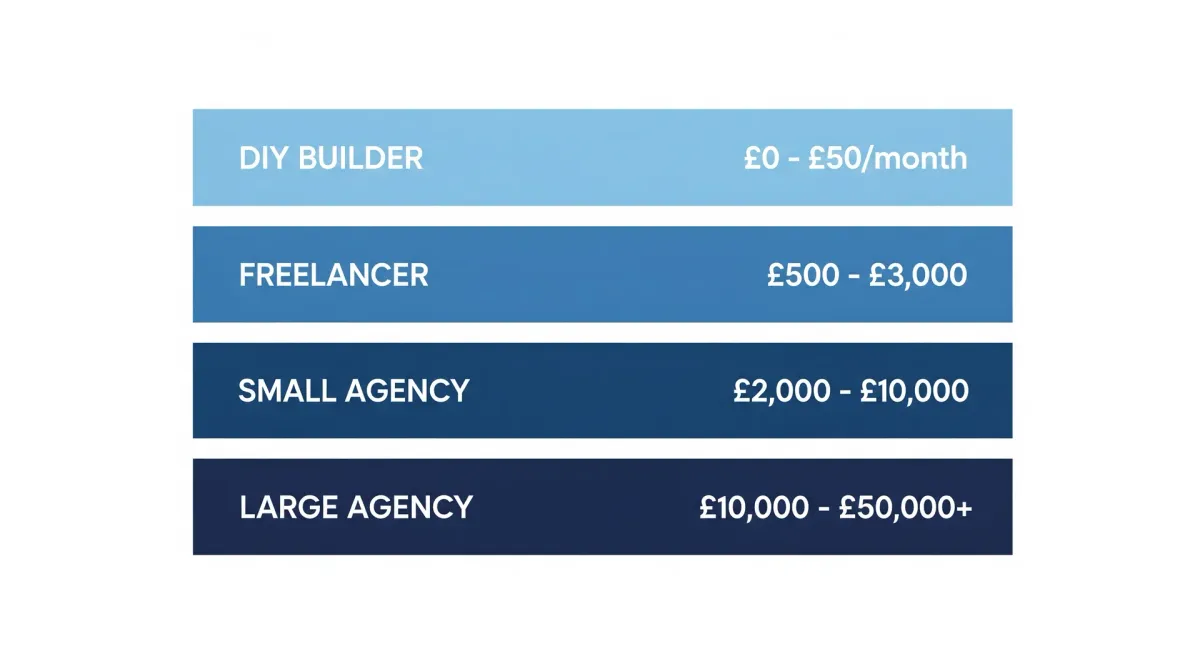
Here is a straightforward breakdown by provider type:
Provider type | Typical cost range | Best for
DIY website builder (Wix, Squarespace) | £0-£50/month | Sole traders, simple portfolios
Freelancer | £500-£3,000 | Small budgets, simple projects
Small/medium agency | £2,000-£10,000 | SMEs, growing businesses
Large agency | £10,000-£50,000+ | Enterprise, complex platforms
These are UK market figures based on what we see quoted regularly. They are starting points, not fixed prices.
What Factors Influence Web Design Costs?
The cost of a website is shaped by five main variables: the number of pages, the complexity of the design, the functionality required, who builds it, and how much content you provide.
Number of pages is the most obvious factor but not always the biggest one. A 5-page brochure site with simple layout templates is far cheaper than a 10-page site with custom animations, interactive elements, and integration to an external CRM.
Design complexity matters a lot. Using a pre-built template costs less than bespoke design. But bespoke design built around your brand, your audience, and your conversion goals produces better results. Custom animations and motion design (page transitions, scroll effects, micro-interactions) also add development time. A static page with simple hover effects is far cheaper than one with coordinated scroll animations and video backgrounds.
Functionality is where costs can escalate quickly. Basic contact forms and photo galleries add little to the budget. E-commerce with inventory management, product filtering, and payment processing adds significantly more. Custom features like booking systems, quote calculators, client portals, or membership areas require bespoke development and can add £1,000-£5,000+ each depending on complexity.
Content preparation is often overlooked. If you provide finished copy and images, the developer spends less time. If you need copywriting and photography sourced and produced, that adds cost.
Who builds it is perhaps the biggest single variable. A junior freelancer working evenings charges very differently to an established agency with a team of specialists.
Does Location Affect Web Design Costs in the UK?
Yes, noticeably. London-based agencies typically charge 20-40% more than regional agencies for equivalent work. This reflects higher overheads: London office space, London salaries, London cost of living.
A brochure website that costs £4,000 at a Yorkshire or Midlands agency might cost £5,500-£6,000+ at a central London agency. The quality of work is not necessarily better. You are often paying for the postcode.
That said, location matters less than it used to. Most web design work is done remotely. We work with clients across the UK from our base in Lincolnshire, and communication via video call, email, and shared tools is every bit as effective as sitting across a desk.
If budget is a consideration, a regional agency with a strong portfolio and good reviews will frequently outperform an expensive London firm. Look at the work, not the address.
Cost by Website Type
The type of website you need is the quickest way to narrow down a realistic budget range.
Brochure / Small Business Website
A brochure site is typically 5-15 pages: home, about, services, contact, and a few supporting pages.
- Freelancer: £500-£2,000
- Small agency: £2,500-£6,000
- Mid-size agency: £5,000-£12,000
This is the most common type of website for UK small businesses. At Brilliant Digital, our brochure websites start from around £2,500 and include design, development, copywriting guidance, and launch. We also offer the option to split the cost into monthly instalments to make it easier to budget. If you are not sure what pages your site actually needs, our guide on the 7 pages you need for a successful website is a practical starting point.
E-commerce Website
E-commerce adds product listings, a shopping cart, payment processing, order management, and usually some degree of inventory management.
- Shopify starter (with template): £1,000-£3,000
- Shopify or WooCommerce (custom): £5,000-£15,000
- Bespoke e-commerce platform: £15,000-£50,000+
The cost depends heavily on the number of products, how complex the checkout process is, and what integrations you need. A 20-product shop with standard Stripe payments is a different project to a 500-product catalogue with multiple shipping zones, tax calculations, and stock syncing to an external warehouse system. Subscription-based products, digital downloads, and multi-currency support each add cost because they require additional configuration and testing. If your shop already exists and you want it selling better rather than rebuilt, what it costs to improve an online shop is a smaller and more specific question.
Bespoke Web Application
A web application is a step beyond a website. Think membership portals, booking systems, marketplaces, SaaS dashboards.
- Typical range: £15,000-£100,000+
- Timeline: 3-12 months
The cost here is driven by custom logic. A booking system needs availability management, calendar integration, email confirmations, and often payment processing. A client portal needs user authentication, role-based access, and data security. These are not template features. They require careful planning, custom development, and thorough testing. If you need a web application, the most important step is writing a detailed specification before you ask for quotes. Without one, every agency will quote a different number because they are each guessing at a different scope.
DIY Website Builders vs Professional Web Design
DIY website builders like Wix, Squarespace, and Weebly let you build a basic website yourself for little or no upfront cost. That makes them genuinely useful in specific situations. But they come with trade-offs.
What you get with a website builder:
- A live website within hours
- No technical knowledge needed
- Predictable monthly cost (typically £12-£45/month)
- Built-in hosting and SSL
What you give up:
- Performance. Website builders are notoriously slow, and page speed is a direct ranking factor in Google.
- Flexibility. You are working within the constraints of the templates.
- Ownership. You do not own your website.
- SEO ceiling. Website builders still lag behind properly coded sites for technical SEO.
The cheapest way to set up a website in the UK is to use a free Wix plan or Squarespace trial. But if your website needs to rank in Google and convert visitors into enquiries, a professionally designed website is a better long-term investment.
Which CMS or Platform Should You Choose?
The platform your website is built on affects both upfront cost and long-term cost of ownership. It is worth understanding the main options.
WordPress remains the most widely used CMS globally. It is flexible and has a huge ecosystem of plugins and themes. The downside: it requires regular updates and maintenance, is a frequent target for hackers, and performance depends heavily on hosting quality and how lean the build is. Expect to budget for ongoing maintenance. If you are considering WordPress, we still offer WordPress website development for clients who need it.
Shopify is the go-to for e-commerce. It handles hosting, security, and payment processing for you. Monthly fees run from £25 to £259 depending on the plan, plus transaction fees on some plans. It is an excellent choice for product-based businesses that want to focus on selling rather than managing servers.
Wix and Squarespace are suited to sole traders and small businesses with simple needs. They are cheap to run but limited in what they can do. Fine for getting started; constraining as the business grows.
Astro and headless CMS (Sanity, Contentful) represent the modern approach. The website is generated as static files and served from a CDN like Cloudflare, making it extremely fast and essentially zero-maintenance. Content is managed through a clean, purpose-built editing interface. This is the stack we use at Brilliant Digital for new builds. Hosting costs are near zero, and there are no plugins to update or databases to patch.
The right platform depends on what your business actually needs. An e-commerce brand needs Shopify or WooCommerce. A content-led business benefits from a headless CMS. A service business that wants performance and low ongoing costs is a good fit for a modern static build.
Freelancer vs Agency: What Is the Price Difference?
Freelancers typically charge £25-£75/hour in the UK. They are often cheaper because their overheads are low. But a sole freelancer can only do one thing at a time, may not cover all disciplines, and can be harder to reach for post-launch support.
Agencies charge more because they employ specialists. A small agency might have a designer, a developer, and an account manager working on your project simultaneously.
Brilliant Digital sits between the freelancer and big agency options. With over 10 years of experience and more than 150 websites built, you get direct access to Alex, agency-level quality and process, and competitive pricing because the overheads stay small. You can see examples of our recent work on our portfolio page.
The honest answer: a good freelancer can do excellent work. A good small agency adds coordination, consistency, and accountability. What matters most is track record and communication, not company size.
Before hiring anyone, check their portfolio for work similar to yours, read their reviews, and ask about post-launch support. A website is not a one-off transaction. You want a relationship with someone who will be around when you need changes six months later.
Want a realistic quote for your project? Get in touch with Brilliant Digital for a no-obligation conversation about what your website needs and what it should cost.

What Does Web Design Cost Per Hour in the UK?
UK web designers typically charge between £30 and £120 per hour, with the average for experienced professionals sitting in the £50-£80 range.
Hourly rates are useful for understanding relative value, but most UK web design projects are quoted at a fixed project price, not by the hour. Fixed pricing gives you cost certainty. Time-and-materials billing can work for ongoing retainers or projects with unclear scope, but it puts the financial risk on you rather than the developer.
If you are quoted an hourly rate, ask for a project estimate with a clear scope of work. That is the number you should be comparing between providers.
How Long Does a Website Take to Build?
Timescales vary significantly depending on project complexity, how quickly you can supply content, and how busy the agency is.
Typical timescales by website type:
- Simple brochure site (5-8 pages): 3-6 weeks
- Mid-size brochure site (10-20 pages): 6-10 weeks
- E-commerce site: 8-16 weeks
- Bespoke web application: 3-12 months
The most common reason projects run over time is content. Copy and images from the client are almost always the bottleneck, not the design or development work. If you want your website delivered on schedule, have your content ready before the project starts. If you are planning around a launch date, how long a website takes to build is the same question read off the schedule rather than the budget.
Discovery and design sign-off also take time. A reputable agency will not skip these stages. Expect 1-2 weeks for initial discovery, 2-3 weeks for design review and approval, then the development phase begins.
If an agency promises your site in a week for a fixed low price, be cautious. It usually means templates with minimal customisation, limited testing, and no proper handover.
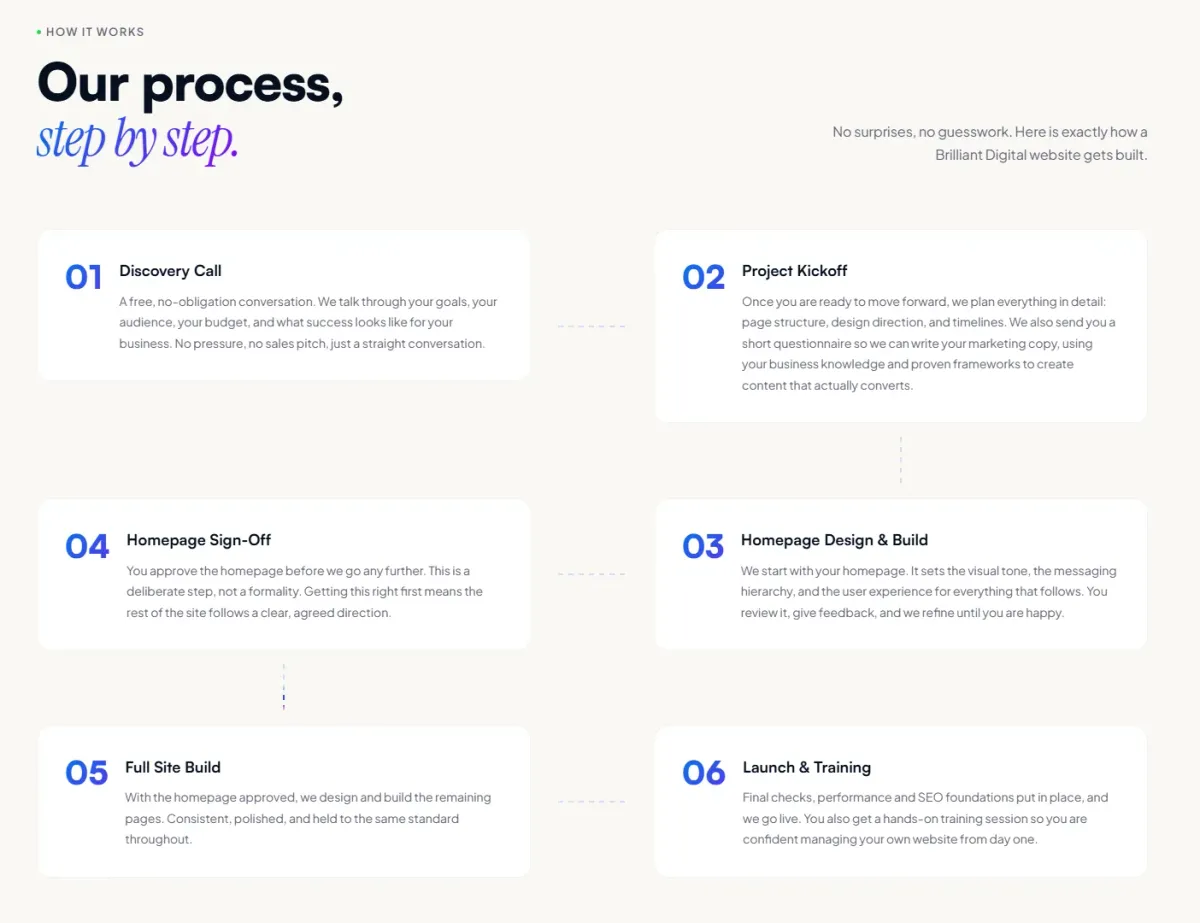
Here is how a typical project looks at Brilliant Digital, from first conversation to launch:
Domain and Hosting Costs
Domain names typically cost £8-£20/year for a .co.uk domain and £10-£15/year for a .com.
Website hosting varies based on the type:
Hosting type | Typical annual cost | Best for
Shared hosting | £50-£150/year | Basic WordPress sites
Managed WordPress hosting | £200-£600/year | Serious WordPress sites
Cloudflare Pages / static hosting | £0-£50/year | Modern static sites (Astro, etc.)
Dedicated server or cloud | £500-£3,000+/year | High-traffic or complex platforms
One underappreciated advantage of modern tech stacks like Astro deployed to Cloudflare is that hosting costs drop to near zero. There are no servers to manage, no database to maintain, and no monthly hosting bill to negotiate. The site is served from a global CDN, which means it loads fast regardless of where your visitors are in the UK.
Ongoing and Maintenance Costs
Your website does not cost money once at launch. It costs money every month.
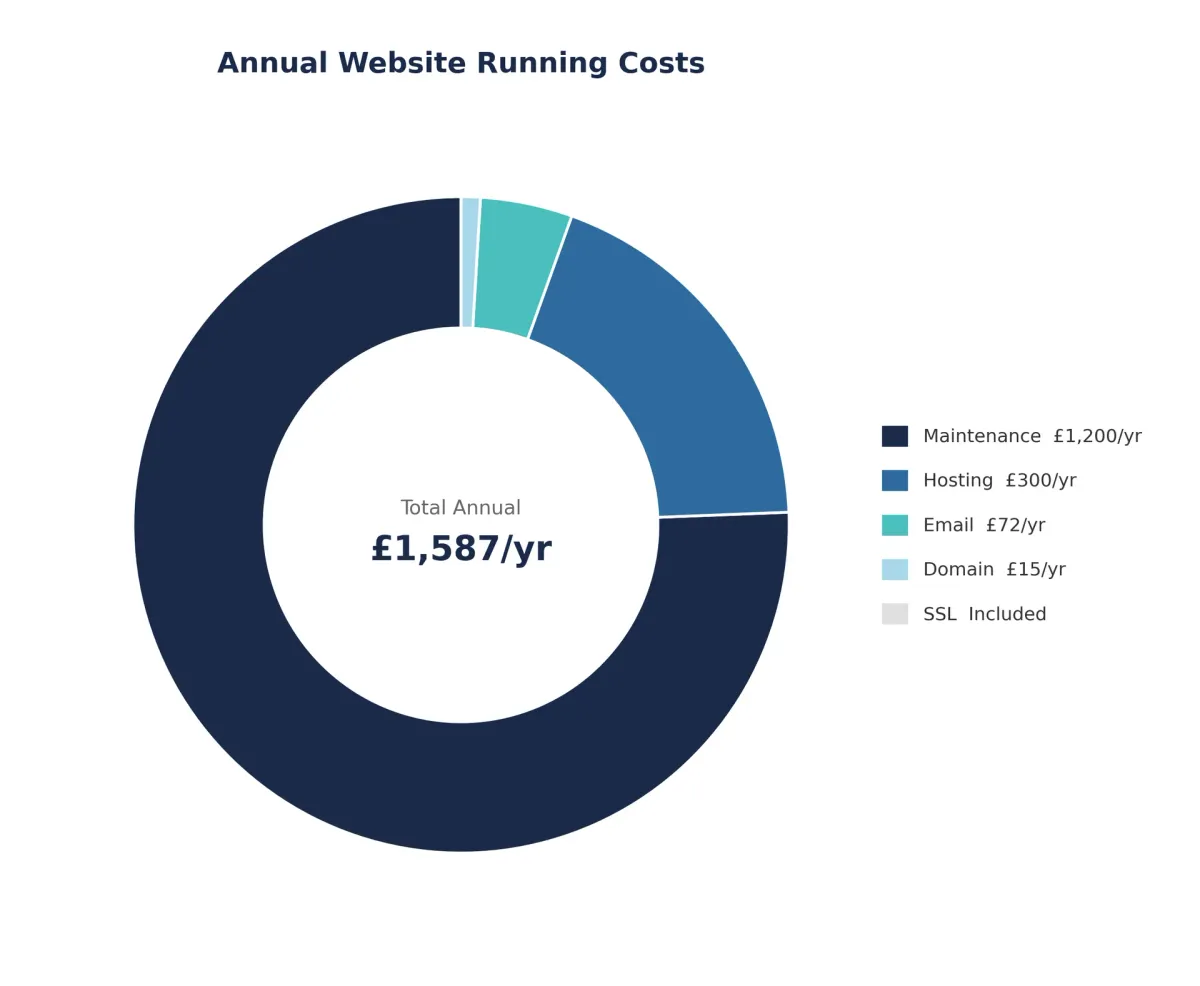
Typical ongoing costs for a small business website:
- Domain renewal: £10-£20/year
- Hosting: £50-£600/year depending on platform
- Maintenance retainer: £50-£200/month
- SSL certificate: Usually included with hosting
- Email hosting: £3-£10/user/month
WordPress-specific costs deserve a separate mention. WordPress is free software, but running it properly is not free. Plugin licences, theme renewals, security monitoring, and regular core updates add up. A poorly maintained WordPress site is a security risk. A well-maintained one needs either your time or a retainer from your developer, typically £50-£150/month.
One of the reasons we moved away from WordPress for new builds at Brilliant Digital is that the ongoing cost burden for clients was real. Modern frameworks require almost no maintenance because there are no plugins to update, no databases to patch, and no login page for hackers to target.
SEO is another ongoing cost worth budgeting for. Factor in £200-£800/month if you want professional SEO management. Getting your site built is step one. Getting it found in Google requires consistent content and optimisation work.
Do Modern Tech Stacks Change the Cost Equation?
Yes, and most web design cost guides do not cover this because most agencies are still building on WordPress.
Modern frameworks like Astro, paired with a headless CMS (such as Sanity), produce faster, more secure websites that are easier to maintain long term. The upfront development cost can be similar to a well-built WordPress site. The ongoing cost is significantly lower because there is almost nothing to maintain.
To put it in numbers: a WordPress site might cost £4,000 to build plus £200/month in hosting and maintenance (£2,400/year). Over three years, that is £11,200 total. A modern static site might cost £4,500 to build with near-zero hosting and no maintenance. Over three years, that is around £4,700 total. The upfront cost is similar, but the total cost of ownership is less than half. We wrote in detail about the real costs of WordPress if you want the full breakdown.
AI tools are also changing what web development costs in 2026. At Brilliant Digital, we use AI to support our workflow: for code quality checks, for SEO audits, for copy refinement, and for speeding up repetitive tasks. The design thinking, strategy, and client relationships are still entirely human. AI just lets us deliver higher quality work in less time, which keeps pricing competitive without cutting corners.
What Are Reasonable Questions to Ask Your Web Designer?
These questions sit inside a bigger decision. If you are still weighing up who to hire, our guide on how to choose a web designer covers portfolio checks, ownership terms and the red flags worth walking away from.
On pricing:
- Is this a fixed price or time and materials?
- What is and is not included in the quoted price?
- What are the ongoing costs after launch?
On process:
- What does the process look like from start to launch?
- How many rounds of revisions are included?
On technology:
- What platform will you build on, and why?
- Who will own the website and the hosting when the project is done?
On results:
- Can I see examples of websites you have built in my industry?
- How will we measure whether the website is working?
A good web designer will answer these questions clearly and without defensiveness.
Frequently Asked Questions
How much does a basic 5-page website cost in the UK?
A basic 5-page website from a professional UK web designer costs between £1,500 and £4,000, depending on the complexity of the design and the experience of the provider. Freelancers typically sit at the lower end of this range; small agencies at the higher end. DIY website builders can reduce this to under £200 per year, but with significant limitations on performance and flexibility.
How much do web designers charge per hour in the UK?
UK web designers typically charge £30-£120 per hour. Junior freelancers are at the lower end; senior developers and specialist UX designers are at the higher end. The average for experienced, professional web designers in the UK sits around £50-£80 per hour. Most projects are quoted at a fixed price rather than billed hourly.
What is a reasonable budget for a small business website in the UK?
A reasonable budget for a small business website in the UK is £2,500-£6,000 for professional design and development. This covers a well-designed brochure site with 8-15 pages, proper SEO foundations, a content management system, and post-launch support. Spending less is possible but usually involves trade-offs in quality or ongoing costs.
How much does a 10 to 20 page website cost?
A 10-20 page website from a UK web design agency typically costs between £4,000 and £10,000, depending on design complexity and functionality. More pages alone do not increase cost dramatically if the design system is consistent. What adds cost is unique layouts, interactive elements, or integrations for each additional section.
Can I build my own website for free?
Yes. Wix and WordPress.com both offer free plans, and Squarespace has a trial period. A free website is viable for a very early-stage business or a personal portfolio. For any business that needs to appear professional, rank in Google, and convert visitors into enquiries, a free website builder will hold you back.
What is the cost of website hosting in the UK?
Website hosting in the UK typically costs £50-£600 per year for a small business website. Basic shared hosting starts around £4-£8 per month. Managed WordPress hosting runs £20-£50 per month. Sites built on modern static frameworks (Astro, Next.js) can be hosted on platforms like Cloudflare Pages for little to no cost. For the full breakdown by hosting type, see our guide to UK website hosting costs.
What Does a Poor Website Actually Cost Your Business?
The cost conversation usually focuses entirely on spend. The more useful question is what a poor website costs you.
A website that does not load quickly will be abandoned before the visitor reads a word. Google's own research shows that as page load time increases from one second to three seconds, the probability of a mobile visitor bouncing increases by 32%. For a business getting 500 visitors a month, a slow site could mean losing 160 potential enquiries before they even see your offer.
A website that is not properly optimised for search will not appear when people look for what you do. If you are a plumber in Leeds or an accountant in Manchester, that means your competitors take enquiries you never knew existed. If you want to understand how search optimisation works, our beginner's guide to SEO explains the basics.
A website that does not clearly communicate your offer, build trust, or guide visitors toward action will generate enquiries at a fraction of its potential. Even a modest improvement in conversion rate, from 1% to 2%, doubles the number of leads from the same traffic.
The cost of a website is not just what you pay at launch. It is what you pay every month in missed enquiries from a site that is not doing its job.
To show what that difference looks like in practice, here is a real project where we redesigned a business website from scratch:
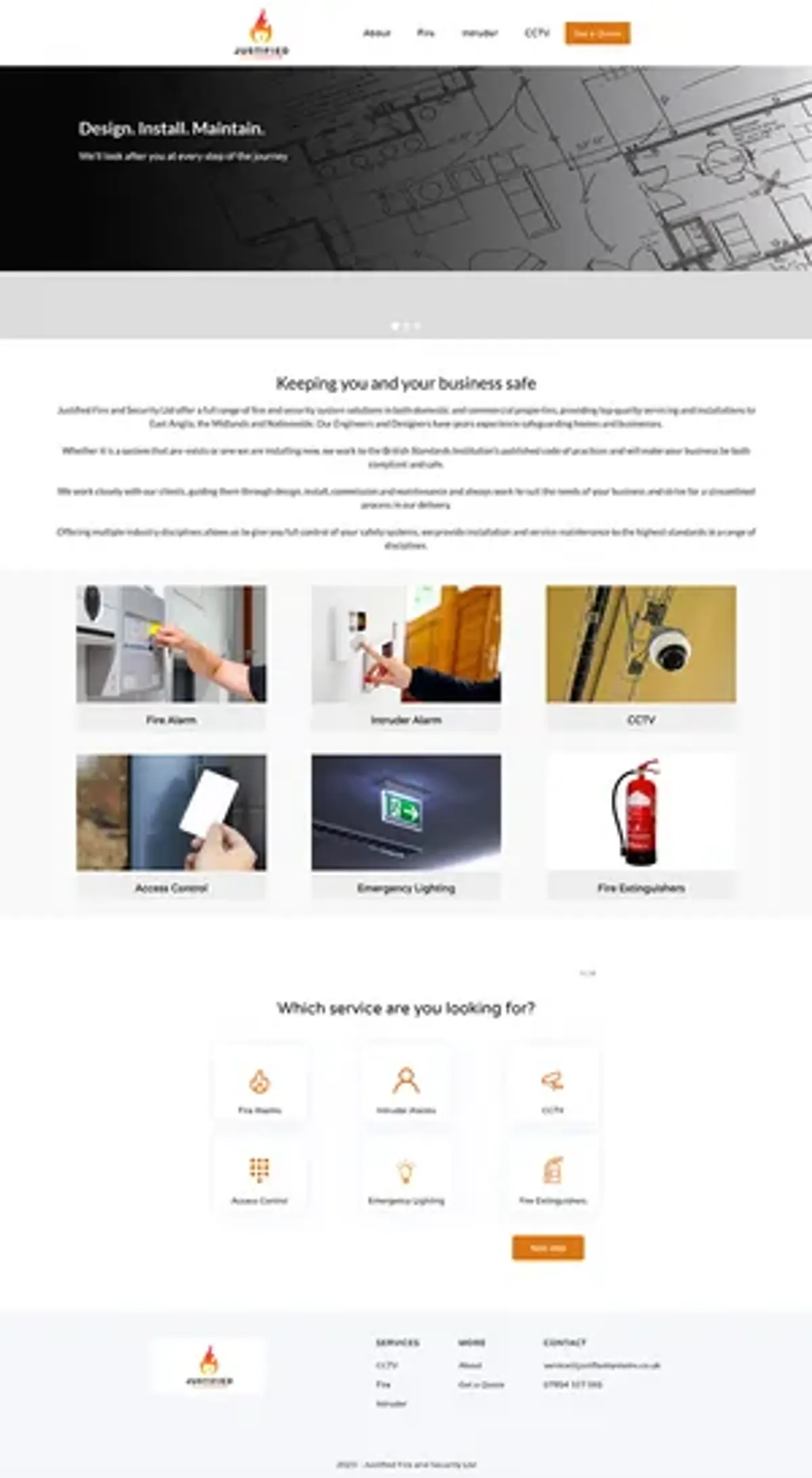

The websites that generate enquiries consistently are the ones built with purpose: designed around the customer journey, technically sound, and maintained properly. That is not an accident and it is not cheap. But it pays for itself.
If you are thinking about a new website and want an honest conversation about what it would cost, get in touch with Brilliant Digital. No hard sell. Just a straight conversation about what is possible.