The short version
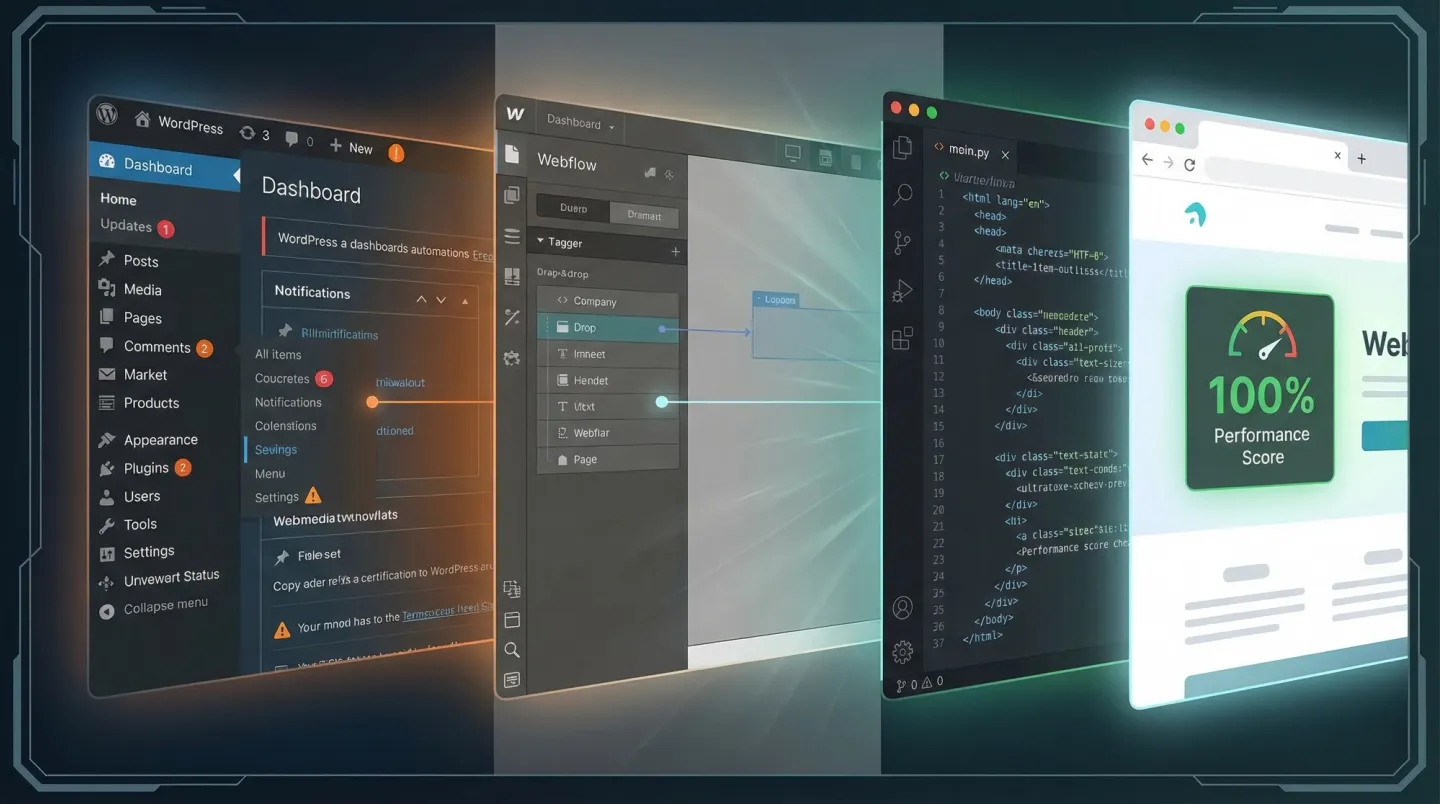
We built websites on WordPress for seven years. Then we switched to Webflow. Now, for most of our projects, we go a step further and code websites from scratch using modern tools. No page builders. No themes. No plugins.
And our clients’ websites have never been faster, cheaper to run, or easier to maintain.
This is not a “WordPress is dead” article. WordPress still powers a third of the internet, and it still works for certain situations. But for us, building client websites that need to be fast, secure, and low-maintenance, it stopped being the right tool.
Here is what happened.
Seven years of WordPress: what worked and what did not
We started Brilliant Digital in 2014, and like almost every web agency at the time, we built on WordPress. It made sense. Clients had heard of it. There were themes for everything. The plugin ecosystem meant we could add functionality without building it from scratch.
For the first few years, it was fine. More than fine. We built over 100 websites on WordPress.
But the cracks showed up gradually.
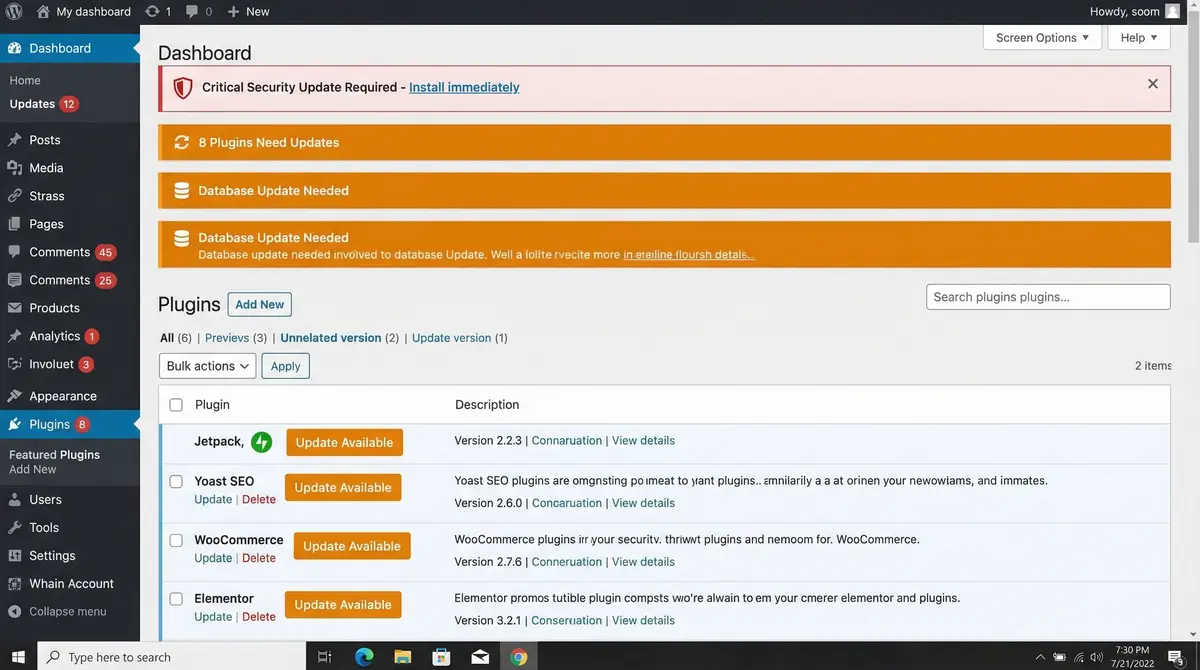
Security was constant work. WordPress sites get targeted because they are everywhere. Every plugin is a potential vulnerability. We spent hours each month updating plugins, patching security holes, and dealing with the occasional hack. One client’s website got compromised because a single plugin had not been updated in three weeks.
Speed required effort that should not have been necessary. Out of the box, WordPress is not fast. Add a theme, a page builder, a dozen plugins, and you are loading hundreds of kilobytes of code the visitor does not need. We could optimise it, but we were always fighting the platform instead of working with it.
Maintenance became a service in itself. Updates could break things. Plugin conflicts were unpredictable. We ended up charging clients a monthly maintenance fee just to keep their sites running properly. That felt wrong. A website should not need constant babysitting.
The real cost was hidden. WordPress itself is free. Hosting, premium themes, premium plugins, security monitoring, backup services, SSL certificates, and monthly maintenance? Not free. Most of our clients were spending £60 to £150 per month before they even thought about making changes to their content. We wrote about this in detail in our article on the real costs of WordPress.
The Webflow chapter: great, but we needed more
In 2021, we moved to Webflow. We wrote about that decision at the time in why we moved to Webflow.
Webflow solved nearly all of our WordPress frustrations. No plugins to maintain. No security patches to worry about. Visual design tools that let us build faster. Hosting was built in. We became a certified Webflow Partner and built some genuinely good sites on the platform.
We still use Webflow where it is the right fit. For certain projects, it is an excellent tool.
But as we took on more ambitious projects, we started hitting limits that had nothing to do with Webflow being bad. It is just the nature of any platform.
Custom functionality was difficult or impossible. When a client asked for a bespoke quote calculator, or a custom booking flow, or anything beyond the built-in components, we were working around the platform rather than with it. Webflow gives you a set of building blocks. They are good building blocks. But if what you need is not in the box, your options are limited.
We wanted complete creative and technical freedom. With a platform, you are designing within its constraints. The layouts it supports. The interactions it allows. The way it structures pages. For simple brochure sites, those constraints are barely noticeable. For anything more ambitious, they start to shape the project in ways that do not always serve the client.
We wanted to own the output. With any platform, the website lives within that platform’s ecosystem. That is not necessarily a problem, but we liked the idea of building something that belongs entirely to the client, hosted wherever makes sense, with no ongoing platform dependency.
None of this makes Webflow a bad choice. It is still one of the best website platforms available, and we recommend it to clients where it fits. But for the projects where we want full control and the ability to build anything a client can imagine, we needed a different approach.
What we actually needed
After building on two different platforms, we had a clear picture of what mattered most:
Speed without compromise. Pages should load in under a second, not because we optimised around a platform’s limitations, but because there is nothing unnecessary being loaded in the first place.
Zero maintenance for clients. No updates to run. No plugins to patch. No monthly fees just to keep the lights on.
The ability to build anything. If a client needs a quote calculator, a custom search tool, or a unique interactive feature, we should be able to build it without worrying about what the platform supports.
Content editing that is simple for clients. Business owners should be able to update their own text, images, and pages without calling us or learning a complicated system.
Low running costs. A brochure website for a small business should not cost £100 per month to host.
No single platform ticked all five boxes. So we stopped looking for a platform.
What we use now: code, not platforms
Instead of picking another website builder, we now code every site ourselves.
We use a modern framework that generates the entire website as simple, static files. There is no server processing every time someone visits a page. No database queries. No loading time while the platform figures out what to show. Just clean, fast pages that are ready before the visitor even blinks.
For content editing, we use a separate system that gives clients a clean, simple interface. They log in, edit their text or swap an image, and the site updates automatically. No plugin dashboards. No confusing settings panels. Just their content.
For hosting, we use a global network that serves each page from whichever server is closest to the visitor. Security, speed, and reliability are all handled automatically. The hosting cost for most client sites? Under £5 per month. Some are free. We break down the price differences in our UK website hosting cost guide.
The combination means our clients get websites that:
Load in under one second
Cost almost nothing to host
Need no maintenance or updates
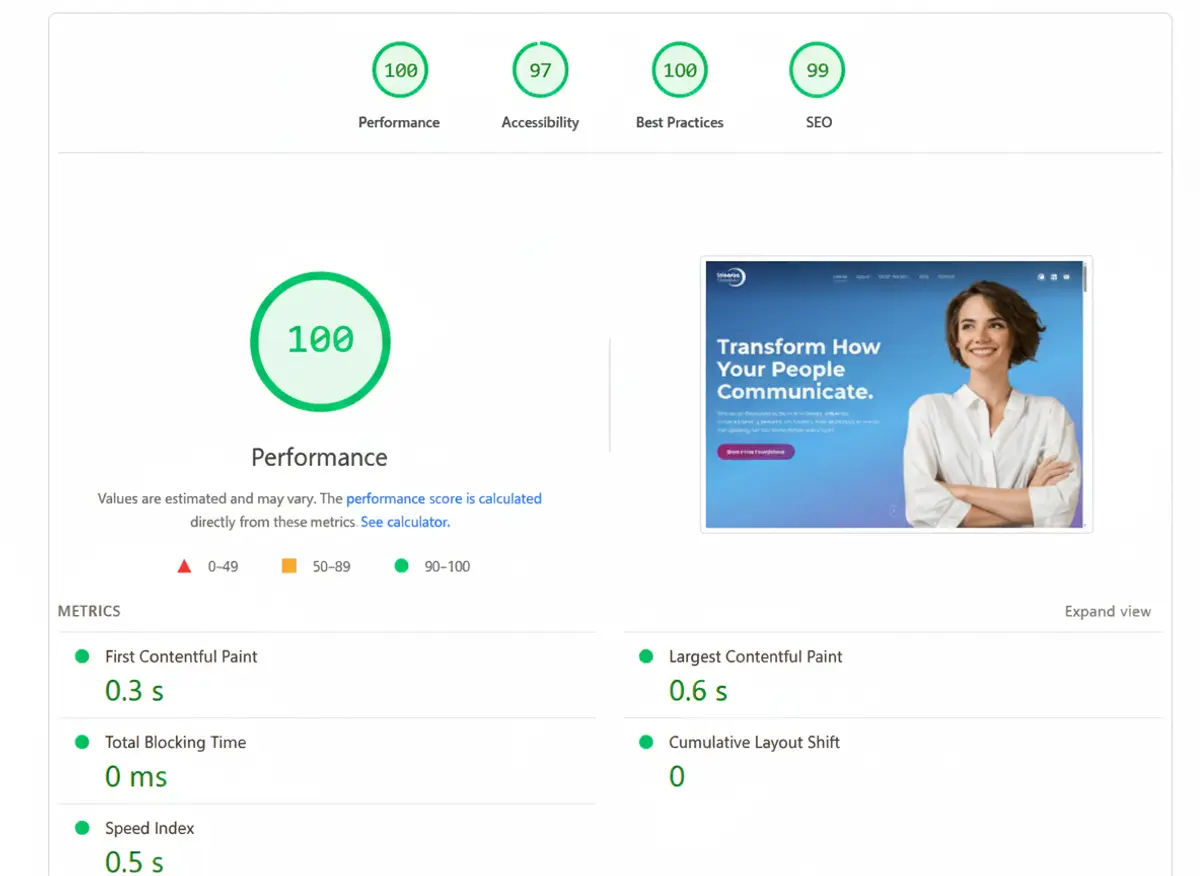
Score 95 to 100 on Google’s speed tests consistently
Are edited through a clean, simple content editor
What this means if you are choosing a website platform
WordPress still makes sense if you need a complex online store with very specific functionality, or if you are building a site yourself and need the widest range of off-the-shelf themes and plugins. We put together an honest guide to WordPress websites to help you decide if it is the right fit.
Webflow is a strong choice if you want a well-designed, professional website without the maintenance headaches of WordPress. We still use it ourselves for certain projects.
But if you are hiring an agency to build a bespoke website for your business, ask them what happens behind the scenes. Ask about page speed, hosting costs, maintenance requirements, and what you are actually paying for each month after the site launches.
The answers might surprise you.
Frequently Asked Questions
Is WordPress still worth it in 2026?
For some projects, yes. It still suits content-heavy sites and teams who want a familiar admin. But for most small business websites it brings avoidable weight: plugin bloat, security patching, and slower performance. Modern coded stacks give you a faster, more secure site with far less maintenance.
What is a good alternative to WordPress?
For most business sites we now build with modern tools like Astro and Cloudflare, which produce fast, secure sites without plugins to maintain. Webflow is a solid middle ground for simpler projects. The right choice depends on what the site needs to do and who maintains it.
Why do web agencies move away from WordPress?
Mostly performance, security, and maintenance. WordPress relies on plugins that slow sites down and need constant updating, and it is a frequent target for hacks. A modern stack removes most of that overhead and gives clients a faster, safer site that needs less upkeep.
The honest takeaway
We used WordPress for seven years. We used Webflow for two. Both taught us something. Neither was a mistake at the time.
But looking back, the pattern is clear: every time we relied entirely on someone else’s platform, we inherited their limitations. What the platform could do became the ceiling for what we could offer.
Now, for most projects, we build everything ourselves. It takes more skill, but the result is better for our clients in every measurable way. Faster. Cheaper. More secure. Simpler to manage. And there is no ceiling on what we can build.
And with AI now able to build basic websites in minutes, the skills that matter most are the ones that go beyond what any tool can do on its own. We wrote more about this in our take on AI and web designers.
If that sounds like what you have been looking for, we should talk.
Want to know what a new website might cost? Read our comprehensive guide to web design costs in the UK.