AI can build a website now. And not a terrible one, either.
Wix, Hostinger, Lovable. Give any of them a description of your business and you will have something live in minutes. Pages, copy, images, contact form, mobile-friendly. It works. We are not going to pretend it does not.
But there is a question nobody seems to ask after the excitement wears off: will that website actually do anything for your business?
When every website looks the same
The problem with AI-built websites is not that they look bad. They look fine. That is the problem.
When thousands of businesses use the same tools, they get the same layouts, the same stock-style imagery, the same "Welcome to [Business Name]" hero sections. The copy reads like it was written by nobody in particular, because it was. Nothing reflects how you actually talk to your customers. Nothing about the design says "this is us."
Your website does not look bad. It just does not stand out. It exists, and that is about it.
This absolutely replaces a certain type of web designer. The ones who picked a template, swapped in a logo, wrote some filler copy, and sent an invoice. That business model is dead. Honestly, it deserved to be. AI does the same thing faster and cheaper. If that was all your designer was doing, you were overpaying long before AI came along. It is the same reason we stopped using WordPress and moved to a modern stack. The tools evolve. The ones who do not evolve with them get left behind.
But "not terrible" and "actually works for your business" are two very different things.
The yes-man you did not know you hired
Here is what nobody tells you about working with AI: it does not push back.
Give it one prompt and it builds what you described. Shortcuts and all. It does not ask about your customers. It does not question your navigation. It does not tell you your homepage is trying to do six things at once. It just builds what you asked for and moves on.
And when it makes mistakes, it does not flag them.
We use AI every day at Brilliant Digital. We still catch mistakes constantly. Copy that sounds confident but says nothing. Code that works until it does not. Security shortcuts we would never ship to a client. When we point these out, AI cheerfully agrees: "You are right, I should have done it that way." But it never caught them itself.
We have lost count of the times we have caught AI taking shortcuts. We give it specific instructions: structure the page this way, implement these features, follow these standards. We check, and half of it has been skipped. When we ask why, the AI tells us it wanted to get the job done quickly. Not malicious. Not broken. Just optimising for done, not done properly.
We catch this because we know what the output should look like. If you do not have that expertise, and there is no reason you should, it is not your job, those shortcuts ship. And you would never know.
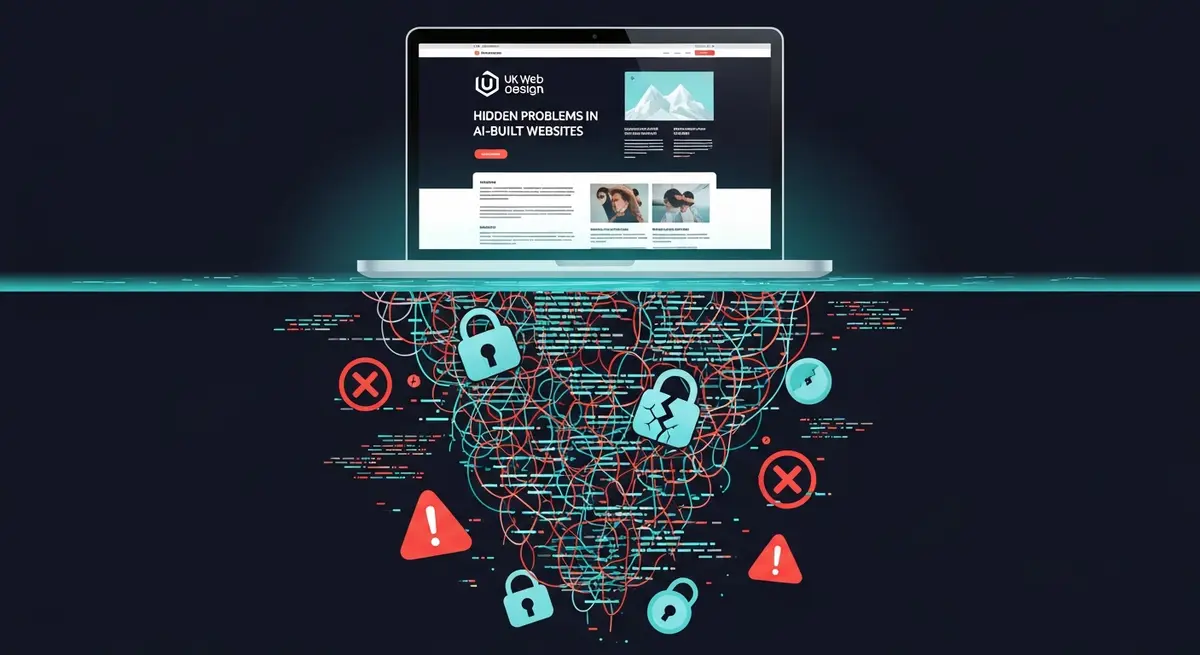
This is not hypothetical. Researchers at Escape.tech scanned over 1,400 applications built with AI tools and found more than 2,000 critical security vulnerabilities: exposed passwords, leaked personal data, broken login systems. A separate peer-reviewed study of 112,000 AI-generated programs found that 51% contained security flaws. The AI flagged none of them.
You get what you invest
Five minutes and a single prompt gets you a five-minute website. That is not an insult. It is just how it works. The quality of what AI produces is directly proportional to the effort and expertise you put in.
And here is the thing: standing out online has never mattered more. When every business has access to the same AI tools, every website starts to look the same. The same layouts. The same tone of voice. The same polished-but-forgettable copy. The noise is getting louder, and blending in is getting easier. If your website looks like it could belong to any business in your industry, it is not doing its job. Your customers are comparing you to your competitors whether you like it or not. A generic website does not just fail to impress. In a market full of generic websites, it actively works against you.
That is why we still spend hours and hours crafting something exceptional, even with AI. Not because AI is slow. Because building something that genuinely stands out, something with copy that sounds like your business, design that reflects who you are, and a structure that turns visitors into enquiries, takes real time and real expertise. There are no shortcuts to distinctive.
A better DIY is still DIY
Let us be fair. An AI-built website is probably better than what most business owners could build themselves from scratch. It is a genuine step up from the old drag-and-drop experience.
But it is still a DIY website.
There is no research into what your customers actually search for, so Google has no particular reason to show your site. No one has tested whether the site loads quickly enough to keep impatient visitors from leaving. No one has checked whether the contact form actually sends notifications. No thought has gone into what makes a visitor trust you enough to get in touch, or what path they should follow from landing on the homepage to picking up the phone.
And there is no marketing thinking tying the website to the rest of your business.
This is already a problem with websites built by human designers. Plenty of them build something that looks beautiful but generates zero enquiries, because nobody thought about the customer's experience beyond making it look nice. AI just produces this problem faster, at scale.
A Figma study surveyed 2,500 designers and developers across seven countries. 78% said AI makes them more efficient. Only 32% said they can actually rely on what it produces. That gap tells you everything.
Our knowledge, supercharged by AI
We use AI at Brilliant Digital. We are open about it.
It helps us move faster on the things that used to eat into project time: initial layouts, draft copy, code scaffolding, sourcing images. But here is what we do not do: pocket that time and call it done.
We reinvest it.
The hours AI saves us on the routine work go straight into the things that actually make a website generate business. Making sure people can find you on Google. Making sure the site loads fast and does not lose visitors. Making sure the design is distinctive, not default. Making sure the copy sounds like your business, not a chatbot. Making sure visitors trust you and know exactly what to do next.
We still spend hours and hours on every project. If we could build a great website with one prompt, we would. But it does not work that way.
Every AI output needs someone who knows what good looks like to review it, push back on it, and reshape it. The wireframe gets rebuilt around your actual customers, not a generic template. The copy gets rewritten until it sounds like a person who understands your business. The code gets reviewed for security and performance. The design gets pushed until it stands out.
The difference is not whether you use AI. It is what you do with the time it gives you back.
A business owner using AI gets a website faster. We use AI to build a better website, one that has been through proper research, performance tuning, security review, and hours of refinement that the AI was never going to do on its own.
You get what you invest. One prompt gets you a generic website. Hours of expertise, combined with the right tools, gets you something that actually works.
Frequently Asked Questions
Will AI replace web designers?
Not the good ones. AI can generate a website quickly, but it cannot understand your business goals, make strategic decisions, or build something designed to convert. It replaced the designers who only pushed templates around. Skilled designers use AI to work faster, not to skip the thinking.
Can AI build a good website on its own?
It can build a decent-looking one, but "looks fine" is a low bar. AI does not know your customers, your market, or what makes people buy. Left alone it produces generic sites that rarely generate enquiries. The strategy, structure, and copy still need a human.
Should I use AI to build my business website?
For a hobby or a placeholder, DIY AI tools are fine. For a site that has to win clients and rank in search, you get what you invest. AI speeds up the work, but a site built to generate business still needs human judgement.
So, should you use AI to build your website?
Maybe.
Not every business needs a bespoke website. If you need something live tomorrow and you are not relying on it for enquiries, an AI builder might genuinely be enough. We would rather tell you that honestly than sell you something you do not need.
But if your website is supposed to bring in new business, build trust, and help you grow, the one-prompt version was never going to do that. Not because AI is bad. Because a website that works takes more than assembling pages. It takes understanding your customers, your market, and what makes someone choose you over the next option.
That is the work we do. Have a look at how we approach websites and see the difference for yourself. AI just helps us do it better.